Waste

More and more people recycle everyday. This helps to reduce the need for landfill and more costly forms of disposal. Recycling also reduces the need for extracting (mining, quarrying and logging), refining and processing raw materials all of which create substantial air and water pollution. This helps to save energy, reducing greenhouse gas emissions and helping to tackle climate change.
Kent Community Waste Prevention Fund
The fund provides grants of up to £5,000 to support community-led projects to deliver new or expanded, innovative waste prevention and reuse initiatives resulting in a prevention or reduction of household waste.
What types of projects can be funded?
Repair cafés ⬧ Tool libraries ⬧ Swap shops ⬧ Community composting schemes ⬧ Reuse initiatives ⬧ Awareness campaigns ⬧ Food waste activities ⬧ Training and upskilling
Open to:
Community groups
Voluntary organisations
Registered charities
Parish and town councils
Social enterprises
Community Interest
Companies (CICs)
This grant is funded by Kent Resource Partnership, a partnership between the 12 district and borough councils in Kent, and Kent County Council. To find out more, please visit About the Kent Resource Partnership – Kent County Council
Your recycling rate in Maidstone is currently 52% - Thank you
The national recycling rate is 44% so a recycling rate of 52% is something to be proud of. Thousands of tonnes of paper, card, glass bottles, plastic bottles and cans, have all been properly recycled into something useful because of you. This will help save valuable resources, reduce energy usage and improve the environment by reducing the carbon footprint of the area.
But, we think we can do even better. Visit our recycling pages and find all the information you need to get your recycling right. To request a bulky item collection, or other bin services see our Bins and Recycling Page. See our five top tips to the right to help you get started.
If you have any questions about household waste and recycling services in Maidstone, or are unsure if an items is recyclable, please contact us here.
Borough Insight Waste and Recycling Special
In Spring 2023 over 82,000 residential properties in Maidstone received a special environmental edition of the Borough Insight Magazine. Included in this issue: litter heroes, local environmental stories, the Queens Green Canopy, energy saving help and MBC sustainable projects. To view the magazine online click here.
The magazine also included an eight page pull-out section dedicated to waste and recycling. The pull-out includes advice and information on what items should be recycled in each bin, how best to recycle specialist items, the issue with contamination and where your recycling ends up. Our aim is for all residents to keep this waste and recycling pull-out and use it to recycle right in Maidstone. Download your copy of the waste and recycling pull-out here.
Recycling specialist items
Many items and types of materials can be recycled but need specialist handling or reprocessing so they must not go in your green recycling bin. Try these other options before throwing your items away:
- Donate- from books to beds, footwear to fridges - declutter and donate your items to a local charity of your choice.
- Swap- swap your pre-loved items with friends, family and neighbours and reduce your need to buy new things.
- Sell or Giveaway- advertise your pre-loved items using online sites like eBay, Gumtree, Freecycle, Facebook Marketplace, Depop and Vinted.
- Upcycle & Repair- try repairing pre-loved items yourself or get creative and upcycle items into something new if they can no longer be used for their original purpose.
Your local Household Waste Recycling Centre's (HWRC) can also accept and recycle a wide range of household materials. Maidstone’s sites are in Tovil and Allington, provided for the recycling and disposal of domestic waste. Visits must be booked in advance.
Trade waste is not accepted at these sites and charges apply for soil, rubble, plasterboard and tyres. HWRC staff are on hand to ensure materials are put in the right container for recycling. To make this easy pre-sort materials before travelling to site. The following items are accepted at these sites:

Recycle Now
The aim of Recycle Now is to build a nation where recycling is the norm and, together with partners, help make a better world for future generations. Recycle Now was established in 2004 when recycling by citizens was in its infancy. Today recycling has been widely adopted across the UK and Recycle Now continues to motivate more people to recycle more of the right things, more often. Many people currently have a ‘rubbish bin first’ mindset. The aim is to shift thinking to a mindset where recycling is the first thing we think about, with appropriate items then being separated out to be put in the rubbish bin. Visit Recycle Now for:
- Tips to reduce recycling contamination
- Understanding recycling labels
- How to set up home composting
- How to recycle plastic bags and wrapping
- What happens to my recycling?
Reducing your waste
We’ve all probably heard of the phrase 'reduce, reuse, recycle'. But have you heard about the other 'R's'? These are guiding principles for reducing waste and they follow a specific order. Here’s the hierarchy and more information on each of the R's:
- Refuse: the first step is to simply say 'no' to packaging and products that are going to create unnecessary waste. Even if it’s free, if you don’t really need it, say no to knick-knacks and other promotional freebies, single-use items like utensils, cups and foodware and anything else that isn’t truly essential in our lives. This is the first step to cutting down on our waste.
- Reduce: reducing goes along with refusing when thinking about what is needed and cutting out what is not. Whenever possible, we can make choices to reduce the things we use, whether that's bringing our own bags to the shops, our own water bottle to events or our own cup to the coffee shop.
- Reuse: whenever possible, we should see if unwanted items can be reused elsewhere. Reuse means that instead of tossing something out that still has use, or life left to it, we can donate it or give it to somebody who can continue to use it. Consider donating items to a local charity, swapping items with family and friends or try and sell or give away items through online sites such as eBay, Gumtree, Marketplace, Depop and Vinted.
- Repurpose: the idea of repurposing involves taking items that were meant for one purpose but can be used for other ones. This is also known as upcycling. It often requires thinking outside the box. See if a product reaching the end of its useful life can be repurposed as something else, for example; use cardboard boxes as garden mulch, shoe boxes as storage boxes and old tins to hold pens. Or consider whether old products can be made into something new; repurposing an old chair and table into garden furniture.
- Recycle: if we are unable to reuse items and they are recyclable, we can recycle them so the material can be converted into something new. While recycling is a way to extend the lifespan of a material, it’s important to note that it is a process that requires resources and energy and some materials, like plastic, have a limited number of times they can be recycled before its quality is diminished and it can no longer be recycled. Learn more about what you can recycle here.
The Circular Economy
In o ur current economy, we take materials from the Earth, make products from them, use them and eventually throw them away as waste. This process is linear. By contrast, in a circular economy we stop waste being produced in the first place, keeping products and materials in use for as long as possible. The circular economy involves redesigning products to be more durable, reusable, repairable, and recyclable, and therefore kept in circulation for as long as possible. The circular economy encourages us, as a society, to change the way we consume and use goods and services.
The liner economy has thrived in the past as it offers high profits for manufacturers and cheap prices for consumers. However, this low cost, high profit model is only possible because it does not include the cost of the waste, pollution and carbon emissions that are built into the system. In contrast, a circular economy offers a wide range of social, economic, and environmental benefits. Mainly that it reduces both our demand for raw materials and the environmental impact associated with obtaining them. Repair, reuse and sharing will become a larger and more valued part of the economy and society in a circular economy. A circular economy encourages consumers to buy items that will last, or can be repaired, saving money in the long term and reducing waste.
Give your unwanted furniture a second chance at Tovil HWRC
Tovil Household Waste and Recycling Centre (HWRC) has introduced a dedicated reuse container for unwanted furniture. Kent County Council (KCC) has partnered with local charity - Making a Difference to Maidstone (MADM), in a sustainable project to resurrect pre-loved furniture for good use as part of a new upcycling project ‘Lovingly Restored.’ The environmental pilot involves operatives at the Tovil HWRC putting aside items that are too good to be disposed of in a container for collection by the charity; these are then either upcycled or sold in its charity shop on the High Street in Maidstone town centre. This helps to fund the work of the MADM Outreach Centre.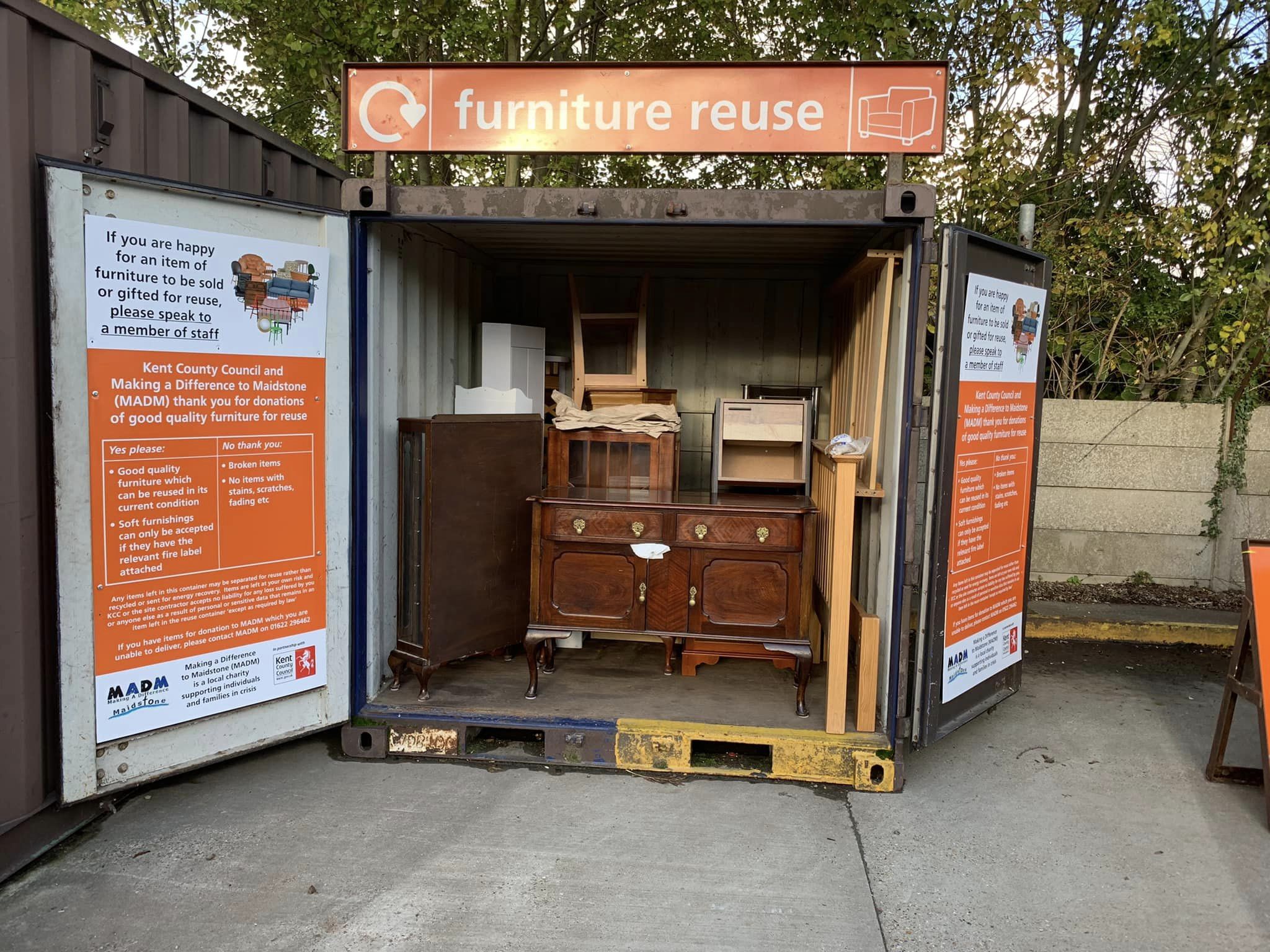
Why not give your unwanted furniture a second chance by taking it to the new reuse container? Items such as chairs, wardrobes, tables and bookcases can be donated and will be sold to raise money for the charity’s outreach work or gifted to residents in need. The project is a great example of the Maidstone community working together to reduce waste and raise money for charity. Please remember that there is an online booking system in operation at Tovil HWRC.
Repair Cafés
Repair Cafés are free meeting places that are all about repairing things, together. You’ll find tools and materials to help you make any repairs you need. Visitors bring their broken items from home and together with the specialists, they start making their repairs in the café. It’s an ongoing learning process and if you have nothing to repair you can lend a hand with someone else’s project. This project teaches people to see their possessions in a new light and once again, to appreciate their value.
There are now over 2,500 Repair Cafés worldwide, including a two in Maidstone- Bearsted Repair Cafe, run by Bearsted Climate Action Network, and Maidstone Repair Cafe, run by Maidstone Climate Action Network.
If you have broken items that you would like repaired for FREE, why not take them along to your closest Repair Cafe in Maidstone.
The Bearsted Repair Café is held at Bearsted Women’s Institute Hall, The Street, Bearsted, Maidstone ME14 4EX, from 1pm to 4pm on 18th May, 20th July, 21st September and 16th November 2024. Tea, coffee and cake will be provided. If you have any questions, or you would like to volunteer please contact BearstedCAN@gmail.com.
The Maidstone Repair Cafe is held at Lockmeadow Market Hall, ME16 8LW, on the first Saturday of every month from 10am to 2pm. Refreshments are available and you can find out more about local sustainability initiatives at the Maidstone CAN zone. If you have any questions, or you would like to volunteer please contact MaidstoneCAN@gmail.com.
The Tovil Repair Cafe alternates schedules to make it highly accessible. Sessions take place at local community spots like the Tovil Community Centre (YMCA) on Barfreston Close or the Tovil Scout Hut. They run twice a month: the second Wednesday evening (7:00 PM – 9:00 PM) and the last Saturday morning (10:00 AM – 12:00 PM). If you have any questions or would like to volunteer please contact: repaircafechepstow@yahoo.com
Yalding Repair Café is held at Yalding Baptist Church, Vicarage Road, Yalding, ME18 6DP, on the 3rd week of each month. If you have any questions, or would like to volunteer please contact via their facebook page: https://www.facebook.com/groups/1280651553076336/
Malling & District Repair Café: is held at East Malling Village Hall, New Road, East Malling, ME19 6DD, on the 3rd Saturday of every month from 10am - 1pm. If you have any questions, or would like to volunteer please contact mallingrepaircafe@gmail.com
Free Water Saving Devices
There’s lots we can all do to save water waste and help the environment, whatever the weather.
South East Water is there to help you save water with simple, free devices that make your home more efficient. These products are freely available to South East Water customers with a delivery address within their supply area only.
Water saving devices include leaky loo strips, regulated shower heads, kitchen streams and much more! Visit Save Water Save Money to order your free devices today.
Do you know your carbon footprint?
Everyone has an environmental footprint. It comes from all the things you do that has an impact on our planet such as the energy you use, the things you buy and the food you eat. By making changes to our lives, like switching to more sustainable everyday habits, we can reduce our environmental footprint
and the damage we do to our planet. The average UK footprint for 2022 was 9.5 tonnes.
The past few years have shown us how connected we all are. Individual actions might seem small but, collectively, they can make all the difference in the world. Visit WWF UK to find our your carbon footprint and learn how to improve it.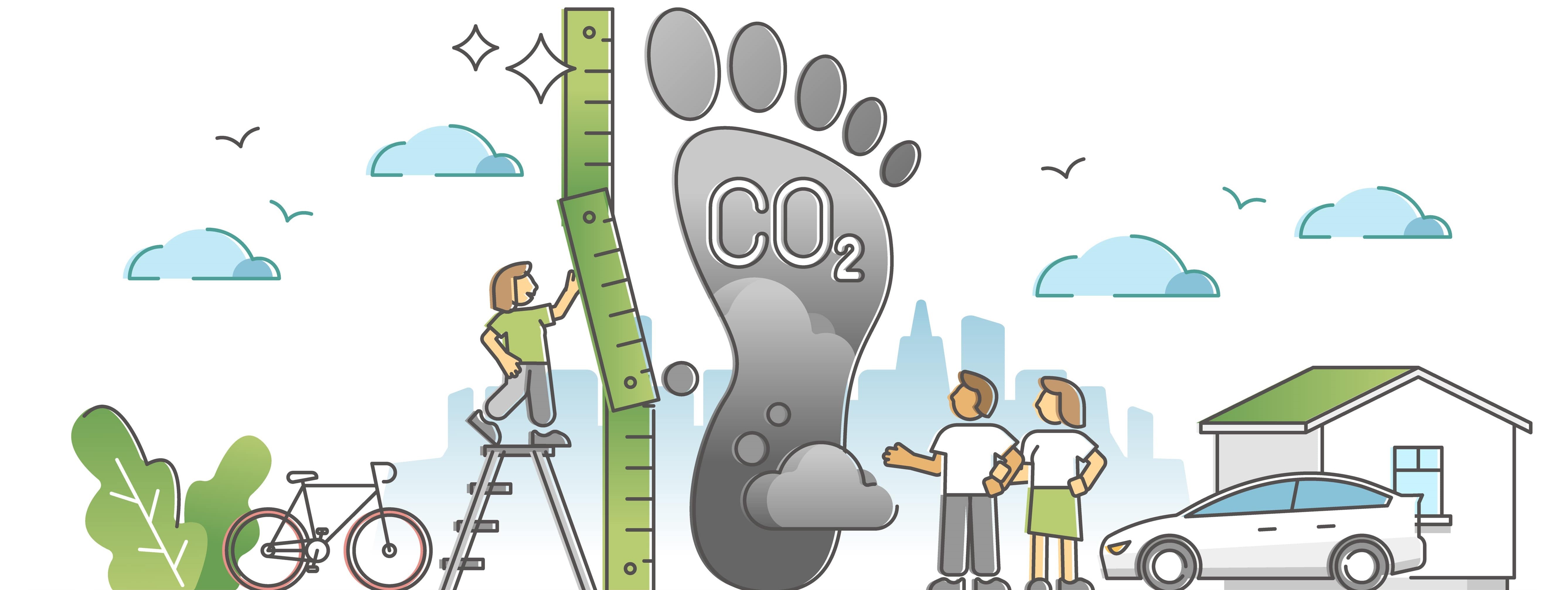
Food and Climate Change
The food we eat and where we get it from can have a major impact on our carbon footprint. Globally, we waste around 25 to 30% of all food produced, and food and farming systems cause 80% of biodiversity loss and one third of global greenhouse gas emissions.
Food Waste
Throwing away uneaten food costs the average UK family more than £700 a year. There is also a huge environmental impact caused by food going to waste. To combat the climate emergency and help protect our environment, we all need to reduce the food we waste. Our top tips to reduce food waste and save
you money:
- Check your fridge temperature - the ideal fridge temperature is between 1-4°C.
- Use a shopping list - write a weekly meal plan and only buy what you need. Make sure you check your cupboards, fridge and freezer before going shopping.
- Use your freezer - freezing food can extend its lifespan and stop it going to waste.
- Measure your food portions - only make what you need.
- Get to know your labels - ‘use by’ relates to food safety, whereas ‘best before’ relates to quality. You can eat food after its best before date if you think it’s still fresh, but you shouldn’t eat food after its use by date
For more hacks, tips and guidance to make the most of your food at home visit Love Food Hate Waste.
Buy locally and seasonally
Introducing more locally grown and seasonal foods into your diet has lots of benefits for you, your community and our environment:
- Food that has travelled across the world to get to your plate has a much higher impact on our environment. More energy is needed to transport, refrigerate and store it and often, more packaging is needed to keep it fresh. By eating local, seasonal foods you can help reduce the environmental costs associated
with your food. - The longer food spends in storage and transit, the higher the chance of it spoiling and becoming waste. Buying locally and in season can help reduce the risk of food becoming waste before it gets to the shelves.
- Local produce is more likely to be ripened on the farm before being harvested and delivered. This food is fresher, tastes better and is more nutritious. Although local food can be more expensive, buying in season means you’re getting it at peak supply when it’s at its cheapest.
- When you buy locally produced food, the money you spend stays in your local area, supporting local farmers and communities.
Grow your own
Growing your own fruit and vegetables in your home, allotment or community garden is one of the easiest ways to reduce emissions caused by transporting produce across the country and overseas. By growing your own produce you will reduce the amount of plastic you are using and you also have complete
control over how your food is grown, including what pesticides you use. Look into natural products and fertilisers which can help your plants thrive without resorting to synthetic ingredients, which may damage the environment. Learn more about growing a wildlife friendly vegetable garden here.
Be a conscious consumer
- Say no to plastic- try and eliminate plastic from your purchases. An easy swap is choosing unpackaged fruit and vegetables at a supermarket, instead of options wrapped in plastic.
- Buy less- instead of shopping and buying everything you think you need immediately, wait before you buy and ask a few questions: Do I really need it? Can I rent or borrow it? Is there a used or pre-loved option available? Is there a more eco-friendly alternative?
- Look at labels- When a product is certified by a trusted organisation, it means you can be confident it has met strict guidelines for safety, environmental or social concerns. Some examples include the FSC (Forestry Stewardship Council) logo on wood and paper products, the MSC (Marine
Stewardship Council) logo on fish, the Rainforest Alliance logo on products sourced from the rainforest, the RSPO (Roundtable on Sustainable Palm Oil) logo on products containing palm oil and the Fairtrade logo on products that have been ethically sourced or made. - Buy local- by buying locally, you're avoiding unnecessary transportation and supporting businesses in your local community.
- Quality over quantity- although buying quality items that are meant to last may get pricey, the items will last much longer than cheaper alternatives and hopefully save you money in the long term. Learn how to properly take care of your purchases. If we can learn how to fix and
mend what is broken, we will not need to buy a replacement.
Maidstone Borough Insite - Waste and Recycling pull out document
Maidstone Borough Council (MBC) is asking everyone to consider reducing their food waste this Christmas to help save money and improve the environment.
Using the separate food waste bin will help reduce food waste across the borough. All uneaten food from plates can be collected from vegetable peelings, uneaten takeaways, bread, cakes, pasta to potatoes. Every year 5,000 tonnes of food waste is removed from households across the borough.
The food waste collected in Maidstone is delivered to the Anaerobic digestion plant on the A228. After being treated at a high temperature the gas produced is burnt to generate electricity, which is sold to the national grid. After treatment, the resulting compost is spread on local fields, as a soil
improver.
Globally food waste is estimated by the Intergovernmental Panel on Climate Change to contribute 8-10% of total man-made greenhouse gas emissions.
Cllr Patrik Garten, Cabinet Member for Environmental Services at MBC said:
“Using the separate food bin, means less waste in the black bin, which will then be lighter and smell better. We empty the food waste caddy bin each week too rather than two weekly.
“Food waste recycling is a massive benefit to the environment, its one of the best ways to reduce your personal carbon footprint. The average family throws away around £750 of food every year. When people use the separate food caddy they become more aware of how much food and money is being thrown away,
so why not make the switch today.”
The Council replaces a lost or broken food caddy at no charge, just call: 01622 602600 or visit https://maidstone.gov.uk/home/primary-services/bins-and-recycling. The caddy’s do need special compositable lining bags which are available to buy in a wide variety of shops.
For lots of tips on food waste reduction please visit https://wrap.org.uk/taking-action/citizen-behaviour-change/love-food-hate-waste
For any questions about household waste and recycling services in Maidstone, please contact recycling@maidstone.gov.uk
Sign up to Maidstone Borough Council e-newsletters ‘Stay Connected’ to receive vital news and updates via email for the many services and events provided by the Council: https://maidstone.gov.uk/StayConnected
Sustainable Food
Sustainable Food: What It Means
Sustainable food refers to a food system that supports people’s health, protects the environment, and contributes to a thriving local economy.
A sustainable approach to food typically considers five key areas:
1. Reducing Food Waste
Sustainable food systems aim to minimise waste at every stage — from production to household level — through actions such as:
- Identifying where food waste occurs
- Encouraging responsible purchasing and storage
- Supporting redistribution of surplus food to community groups
- Promoting composting to reduce landfill and improve soil health
2. Promoting Healthy Eating
Healthy, sustainable food systems help make nutritious food choices easy and accessible. This can include:
- Increasing access to fresh and plant‑based foods
- Supporting community-based healthy eating initiatives
- Providing opportunities for residents to learn about cooking and nutrition
- Creating healthier food environments in everyday settings
3. Supporting Local Food Producers
A sustainable food system strengthens the local economy and reduces environmental impact by:
- Highlighting locally grown or produced food
- Encouraging the use of farmers’ markets and farm shops
- Supporting nature‑friendly farming and food‑growing initiatives
- Showcasing local suppliers and producers
4. Ensuring Food Equity
Food sustainability also considers fair access. This includes:
- Supporting initiatives that help residents access affordable, nutritious food
- Providing routes for people to access support when needed
- Working with community organisations focused on reducing food inequality
5. Collaboration & Partnership
Sustainable food systems involve many different organisations and sectors working together, such as:
- Local food partnerships
- Community organisations and volunteers
- Health, education and environmental sectors
- Local businesses and producers
Sustainable Food Action in Maidstone
Composting (household & community)
Pilot community composting schemes in priority neighbourhoods, working with local partners and tracking reductions in residual waste.
Increase local composting via the allotment association, including site identification for allotment‑based composting pilots and engagement with Master Composters.
Support residents with food‑waste caddies/liners and signposting to home‑composting guidance where appropriate.
Food growing, food forests & orchards
Trial community‑managed green spaces—including food forests and/or community orchards—on suitable council open spaces, with site lists and recommendations prepared for Parks & Green Spaces.
Use allotments as hubs for composting and soil‑health learning (see composting pilots), supporting community growing skills.
Soil health & nature‑friendly cultivation
Soil restoration on council sites: prepare and implement remediation plans for contaminated land; explore the carbon‑sequestration potential of soils on the estate.
No‑dig practices: create resources for allotment holders and partner with regenerative farmers to promote no‑dig techniques locally.
Erosion management: identify risk zones, monitor soil quality annually, and deliver planting plans to stabilise soils.
Peat‑free promotion: share peat‑free guidance and benefits with residents/community groups.
Sustainable food partnerships & coordination
Work with schools and community partners to reduce food waste and support healthy, sustainable food choices.
Deliver the community food larder with the Bread and Butter Thing
Events on Maidstone Borough Council Premises
The following clauses are applicable to events hosted on Maidstone Borough Council land, in order to promote sustainability at events:
8.3 The Hirer will consider and promote travel options to and from the event that are as sustainable and inclusive as possible.
16.5 MBC recommends the Hirer avoids all single-use plastic use in favour of sustainable options.
17.2 The Hirer will consider local commerical traders wherever possible and appropriate.