Retrofitting
Make Your Home Warmer, Greener and Cheaper to Run
Retrofitting your home is one of the most effective ways to reduce energy bills, cut carbon emissions and improve comfort all year round. Maidstone Borough Council is supporting residents to upgrade their homes by signposting to grants, funding programmes and trusted guidance that help make energy‑saving improvements more affordable. If you are interested in having a thermal imaging assessment of your property to determine where you can make energy and cost saving improvements, please email energy@maidstone.gov.uk with subject line 'thermal imaging'.
Across the UK, new national programmes such as the Warm Homes: Local Grant and the Warm Homes Plan have begun making it easier for households to install measures like insulation, solar panels and low‑carbon heating systems including air‑source heat pumps. These schemes aim to improve millions of homes, reduce energy bills and support the transition to cleaner heating technologies.
Why Retrofit Your Home?
Upgrading your home with modern, energy‑efficient technologies can deliver a wide range of benefits:
- Lower energy bills through reduced heat loss and more efficient heating
- A warmer, healthier home, especially during the winter months
- Reduced carbon emissions, supporting local and national climate goals
- Improved property value and higher EPC rating
- Access to grant-funded improvements can significantly reduce installation costs when available
Low‑Carbon Heating: A Better Way to Heat Your Home
Low‑carbon heating systems—such as air‑source heat pumps—use renewable energy to heat your home efficiently. These technologies can lower running costs, reduce emissions and help future‑proof your home as traditional fossil‑fuel heating is phased out nationally.
Available Grants and Support
Warm Homes: Local Grant (WH:LG)
Eligible households in England may be able to access fully funded energy‑saving improvements, including insulation, heat pumps, solar PV and smart controls. This scheme supports low‑income homes and properties with EPC ratings of D–G. Find more information here https://www.gov.uk/apply-warm-homes-local-grant
Climate Vulnerable Retrofit Scheme
A new scheme launched in December 2025 supporting residents in Maidstone offers free of charge home retrofitting items and installation to the most vulnerable households and residents. £50,000 in basic home retrofit items has been provisioned for Maidstone residents, delivered in partnership with Involve Kent. Referrals to Involve Kent for residents struggling from excess cold or excess heat will be assessed for suitability. Items include thermal curtains, draft exclusion kits for windows and doors, LED light bulbs and reflective radiator foil.
Warm Homes Local Plan
The Government’s wider plan aims to upgrade five million homes lower energy bills and accelerate the UK’s shift to clean energy by 2030. It supports improving home insulation and installing low‑carbon heating systems across the country. As new grants and schemes become available to support this, we will promote these to our residents.
Housing Grants
For more information on Housing Grants, please visit https://maidstone.gov.uk/home/primary-services/housing/housing-grants
Other Grant Schemes
For more information on other grant and funding schemes, please visit https://climatechange.maidstone.gov.uk/home/maidstone-borough/borough-buildings-and-heating/grants-and-funding
Energy Saving Tips
Energy bills are now almost double what they were this time last year, with the cost of living at its highest level in a decade. It’s never been more important to understand how energy is used around your home.
We have highlighted some simple changes you can make to help save energy, reduce your carbon footprint and lower your bills.
- Switch to LED lightbulbs- these have longer life spans and are more efficient, saving you money in the long run.
- Turn appliances off- rather than leaving them on standby. Smart plugs or standby savers can help by allowing you to turn all your appliances off standby in one go.
- Turn your thermostat down by one degree- one of the simplest energy-saving tricks is turning your heating down a single degree. You might not think such a small amount would make a difference
- Wash your clothes at a lower temperature- why not try making 30C your standard wash? The lower the temperature, the more energy you’ll save. Reduce your washing machine use by one run a week to save even more.
- Avoid the tumble drier- air dry your clothes. If you dry your clothes on a radiator, hang clothes nearby rather than directly on the radiator. Wet clothes cool the radiator, which makes your boiler work harder.
- Take shorter showers- by reducing your shower time to four minutes you could save up to £95 a year.
- Switch off the lights- when you're not using them. Little things can add up to real savings over the long term.
- Install a smart meter- smart meters put consumers in control of their energy use, allowing them to adopt energy efficiency measures that can help save money on their energy bills and offset price increases. Get in touch with your energy supplier who can arrange for smart meters to be installed at a time and date that suits you. You will not be charged for the installation.
- Insulate your home- there are many different types of insulation to help keep your home warm including roof and loft, cavity wall, solid wall and floor insulation.
- Only wash on a full load- whether this is your dishwasher or washing machine, only wash when it is full. In fact, a full dishwasher can be more efficient with water and energy than washing by hand.
For more home energy advice visit the Energy Saving Trust.
EPC Explained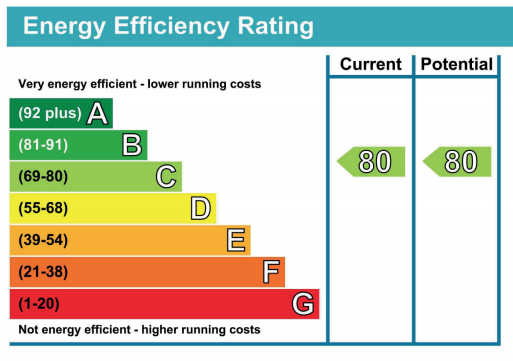
An EPC (Energy Performance Certificate) is a certificate that shows how energy-efficient your property is.
The document includes estimated energy costs, as well as a summary of your home’s energy performance-related features. EPCs also include recommendations on measures that would make your home more energy-efficient, along with estimated costs for implementing the changes and the potential savings you could make. Your property will be given an energy-efficiency grade between A and G, with A being the best - i.e. most energy-efficient - and G being the worst.
For more information on EPCs in England, including how to get an EPC for your house, visit the EPC pages on the gov.uk website.
Insulating Your Home
By identifying problem areas in your home’s insulation, you’ll be able to not only save money on your heating bills but also improve energy efficiency and reduce your carbon emissions. It doesn’t have to cost a fortune, even little fixes around the home can mount up to significant savings in your energy bills.
- Draught proofing- draught proofing is an easy and cheap way to insulate your home. Block up unwanted gaps that let cold air in and warm air out, for example around doors, windows, chimneys, gaps around electrical fittings, loft hatches and where pipe work leads outside. Be sure not to block necessary vents in windows and walls while draught-proofing.
- Windows and doors- energy efficient glazing covers both double and triple glazing. These are windows with two or more glass panes in a sealed unit. Cheaper options to improve the energy efficiency of your home include installing secondary glazing, using heavy curtains or installing sealed shutters on your windows. A properly fitted new external door should include an effective draught-proofing system. Existing doors can be improved by fitting draught-proofing strips around the seals and the letterbox.
- Roof and loft insulation- a quarter of heat is lost through the roof in an uninsulated home. Insulating your loft, attic or flat roof is an effective way to reduce heat loss and reduce your heating bills. Installed correctly, loft insulation should pay for itself many times over in its 40-year lifetime.
- Floor insulation- insulating your ground floor is a great way to keep your property warm. Generally speaking, you only need to insulate the ground floor. If you’re on an upper floor, you don’t usually need to insulate your floor space.
- Cavity wall insulation- if your house was built after the 1920s, it is likely to have cavity walls. A cavity wall is made up of two walls with a gap in between, known as the cavity; the outer leaf is usually made of brick, and the inner layer of brick or concrete block. Many cavity walls can be insulated by injecting insulation material into the cavity from the outside.
- Solid wall insulation- pre-1920 older houses are more likely to have solid walls. A solid wall has no cavity; each wall is a single solid wall, usually made of brick or stone. Solid walls can be insulated, either from the inside or the outside, however this will cost more than insulating a standard cavity wall, but the savings on your heating bills will be bigger too.
- Pipe, tank and radiator insulation- lagging water tanks and pipes and insulating behind radiators reduces the amount of heat lost, so you spend less money heating water up, and hot water stays hotter for longer. Topping up your hot water tank insulation from 25mm to 80mm thick, using a British Standard jacket, could save you around £70 a year, which is more than the cost of the jacket.
Visit the Energy Saving Trust to learn more about insulating your home and find out which insulation type is right for your home.