Tree Planting
Over the last few decades in Kent, we have lost significant areas and many of our most precious habitats and species. We now need to restore those habitats, replenish our depleted soils, and stop the decline of native species to deliver robust ecological networks that are sustainable, ecologically coherent and resilient to climate change.
In 2022 we adopted the Parks and Open Spaces Delivery Plan for Biodiversity which sets out the initiatives that will be put in place to further protect and increase biodiversity in our managed green spaces and will help identify what additional steps can be taken to ensure these vital places are achieving their full potential. In combination, opportunities are identified to introduce more sustainable grounds maintenance practices and to further encourage public awareness and involvement with wildlife.
We are working with key stakeholders on a range of projects and initiatives to protect our most important sites, improve all habitats for wildlife across the borough of Maidstone and build a resilience to climate change. Our partners include Natural England, Kent Wildlife Trust, Medway Valley Countryside Partnership, Kent County Council, and Kent Nature Partnership.
The Kent Biodiversity Strategy sets a goal that, by 2045, Kent will have a rich and growing terrestrial biodiversity, underpinned by more resilient and coherent ecological networks and healthy, well-functioning ecosystems.
Tree Planting
Tree planting is fully supported in our Biodiversity and Climate Change Action Plan. Increasing tree cover is an important part of our strategy for protecting biodiversity and mitigating the climate emergency.
Since 2020, we have planted 11,500 trees in our parks, open spaces and in the community. The majority of these trees are a mixture of UK native species including English oak, wild cherry, birch, beech, hornbeam, yew, field maple and hazel.
Engaging with the public to understand the importance of the natural environment and the benefits that trees and rich biodiversity brings is key to the implementation of our Biodiversity and Climate Change Action Plan. We are working with youth groups, schools, colleges and community groups on allotment projects, window box herb gardens, wild flowering, and home gardening projects, in collaboration with Kent Wildlife Trust, to help make Maidstone greener. We also support other national campaigns, such as The Queen's Green Canopy, and local initiatives, such as the Borough in Bloom, and encourage Maidstone residents to take part and pride in our green spaces.
New Community Woodland in Yalding
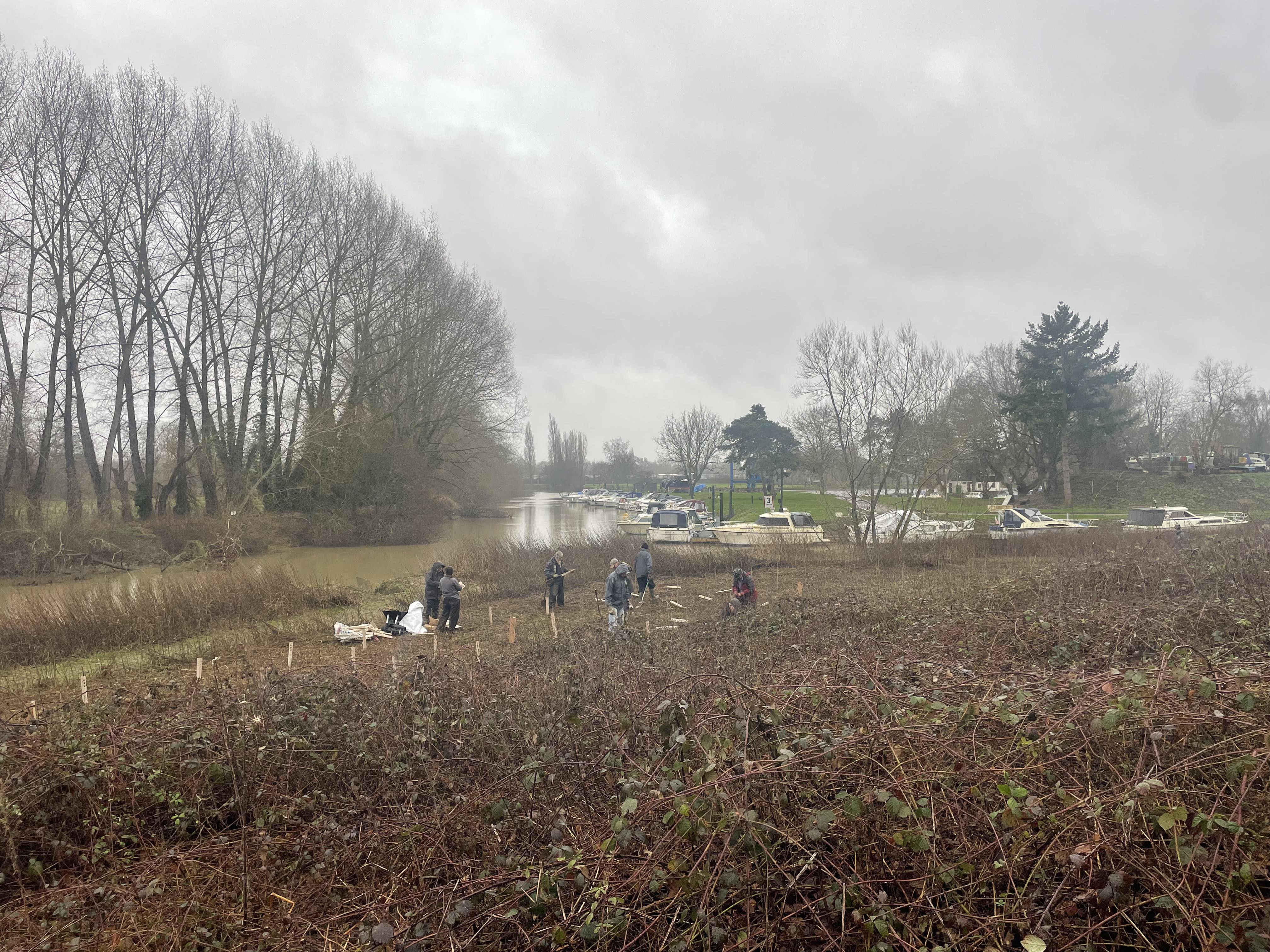
In 2023, we funded a new community woodland in Yalding. The project saw the Council partner with Medway Valley Countryside Partnership (MVCP) and Maidstone Victory Angling Society (MVAS) to plant a total of 1,450 trees adjacent to the River Medway.
Volunteers from the MVAS helped MVCP plant the final 700 trees in January 2024, completing this fantastic project which will benefit the local environment.
Congratulations to MVCP and MVAS for organising and planting the new community woodland and to the volunteers who gave up their time to help make the project such a success!
New Trees at Vineyard in Maidstone
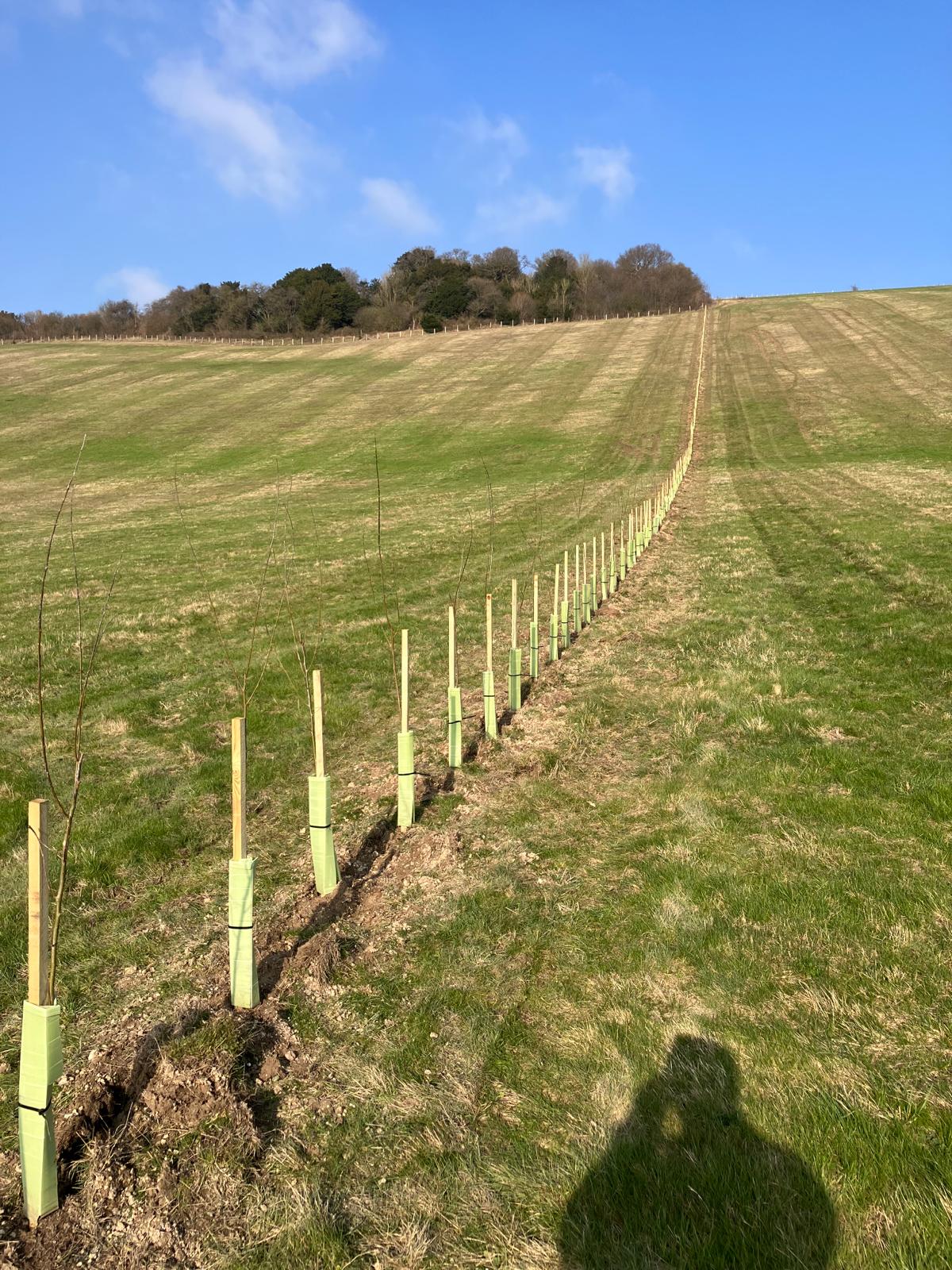
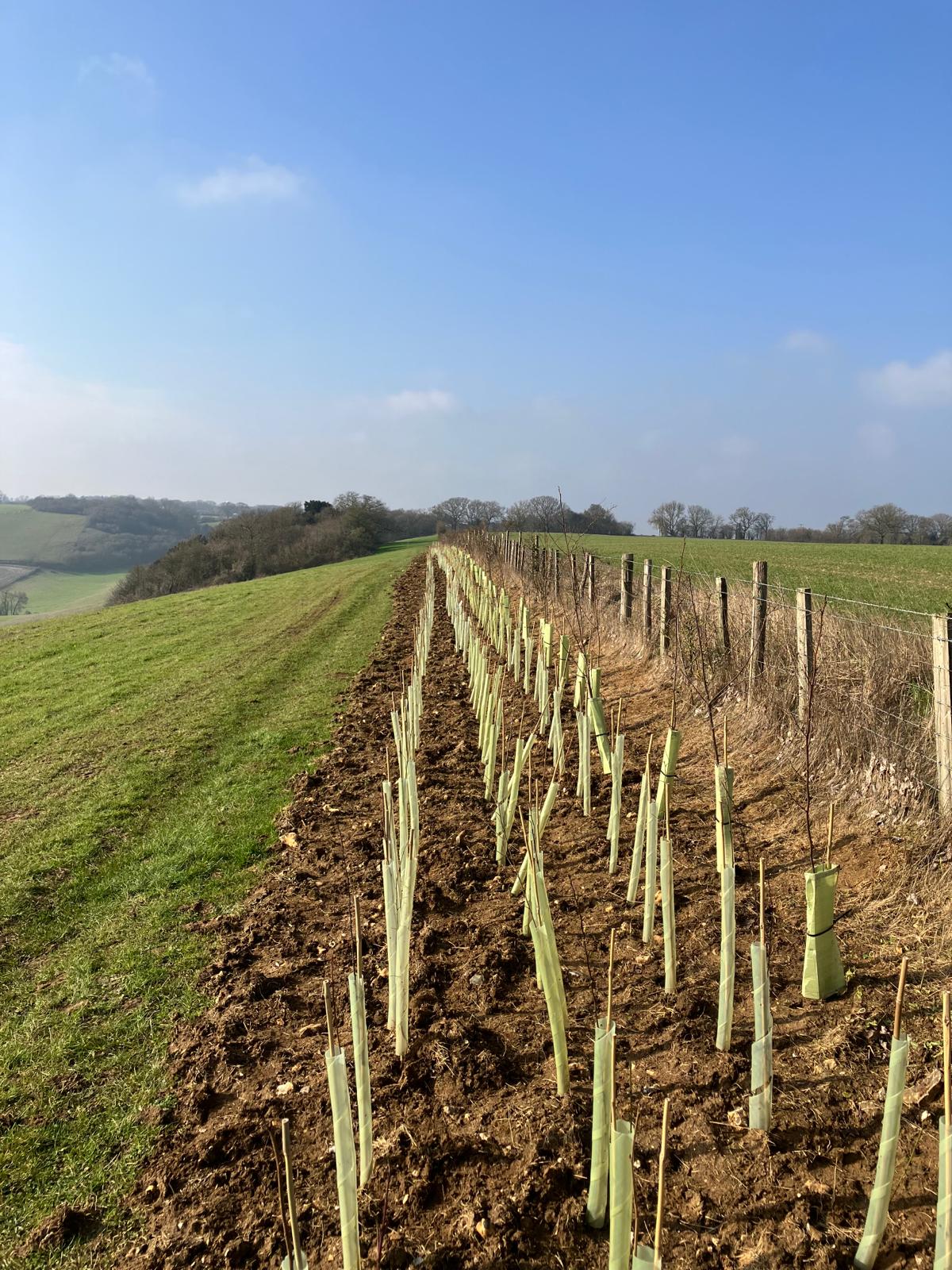
In February 2024, we funded the planting of 5000 trees at a vineyard in Maidstone.
Planting trees and increasing woodland cover is a powerful solution to combating climate change and mitigating increasing global temperatures. Tree planting is beneficial to farmers as trees can protect crops from wind damage, reduce evaporation by creating a micro-climate that retains moisture in the soil, help moderate temperatures, contribute to soil health and attract beneficial insects and birds that act as natural pest controllers.
We once again partnered with MVCP who’s volunteers helped plant 1000 of these trees, creating a large new hedgerow at the vineyard. Volunteers had to battle very wet and windy weather but successfully planted the new hedgerow. We would like to say a huge thank you to MVCP and all their volunteers!

The Queen's Green Canopy
In January 2023, Maidstone Borough Council took part in The Queen's Green Canopy planting initiative, planting 500 trees in seven locations across our parks and open spaces including Allington Recreation Ground, Shepway Green, Giddyhorn Recreation Ground and South Park.
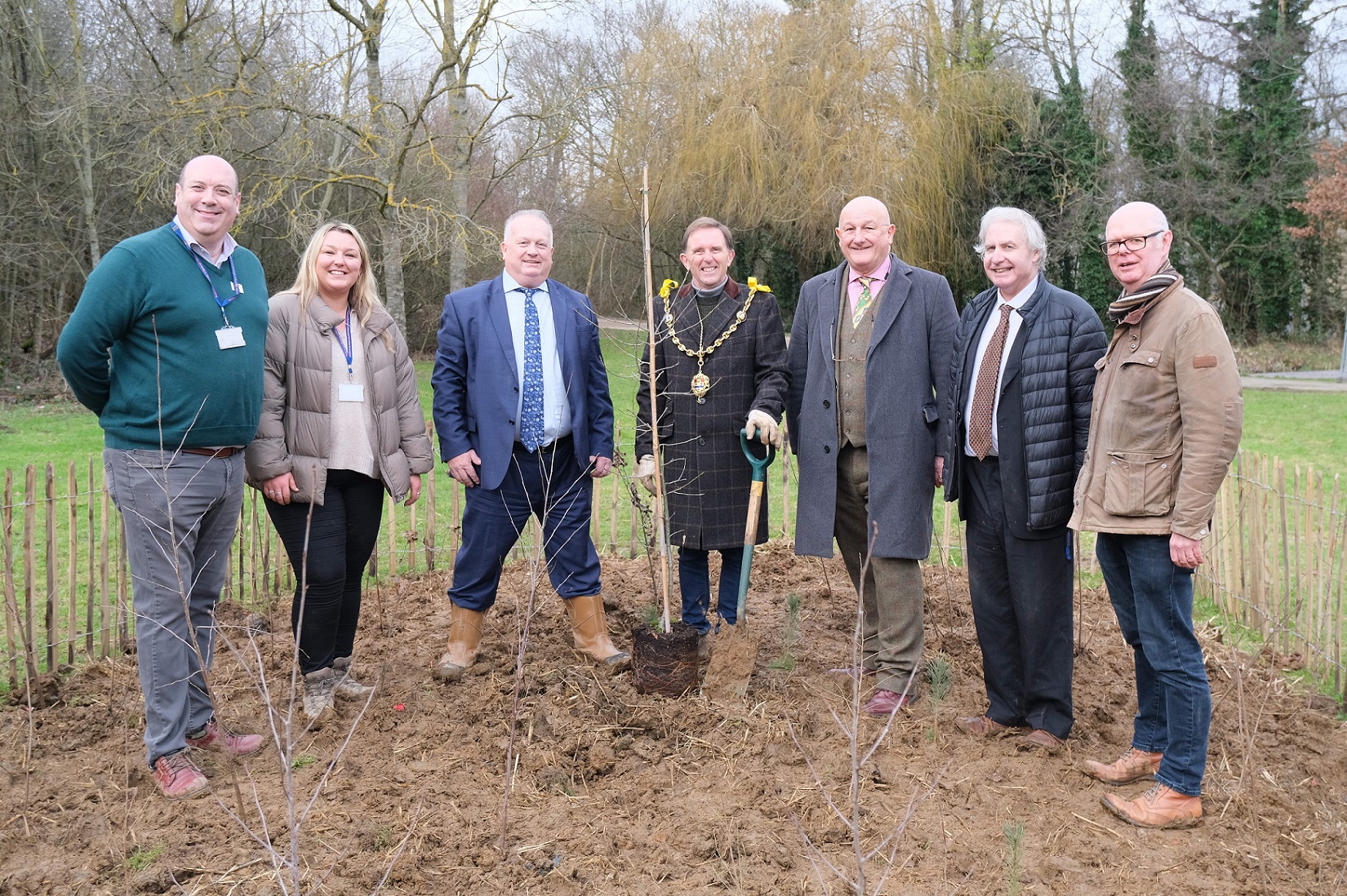
The Queen's Green Canopy is a nationwide initiative created to commemorate the Platinum Jubilee, and was extended to give people the opportunity to plant trees in memoriam to honour Her Majesty Queen Elizabeth II. The Queen’s Green Canopy is proud to have created a living legacy with over a million trees planted in Her Majesty’s name and serve as a lasting tribute to Her Majesty’s extraordinary service to her country and her people.
At Maidstone Borough Council, we worked with local community groups and schools to help plant the new trees across the borough of Maidstone. We would like to say a huge thank you to Allington Primary School, Allington Alligators, Oaks Primary Academy, Archbishop Courtenay Church of England Primary School and Maidstone and Malling Alternative Provision for all their help with tree planting.
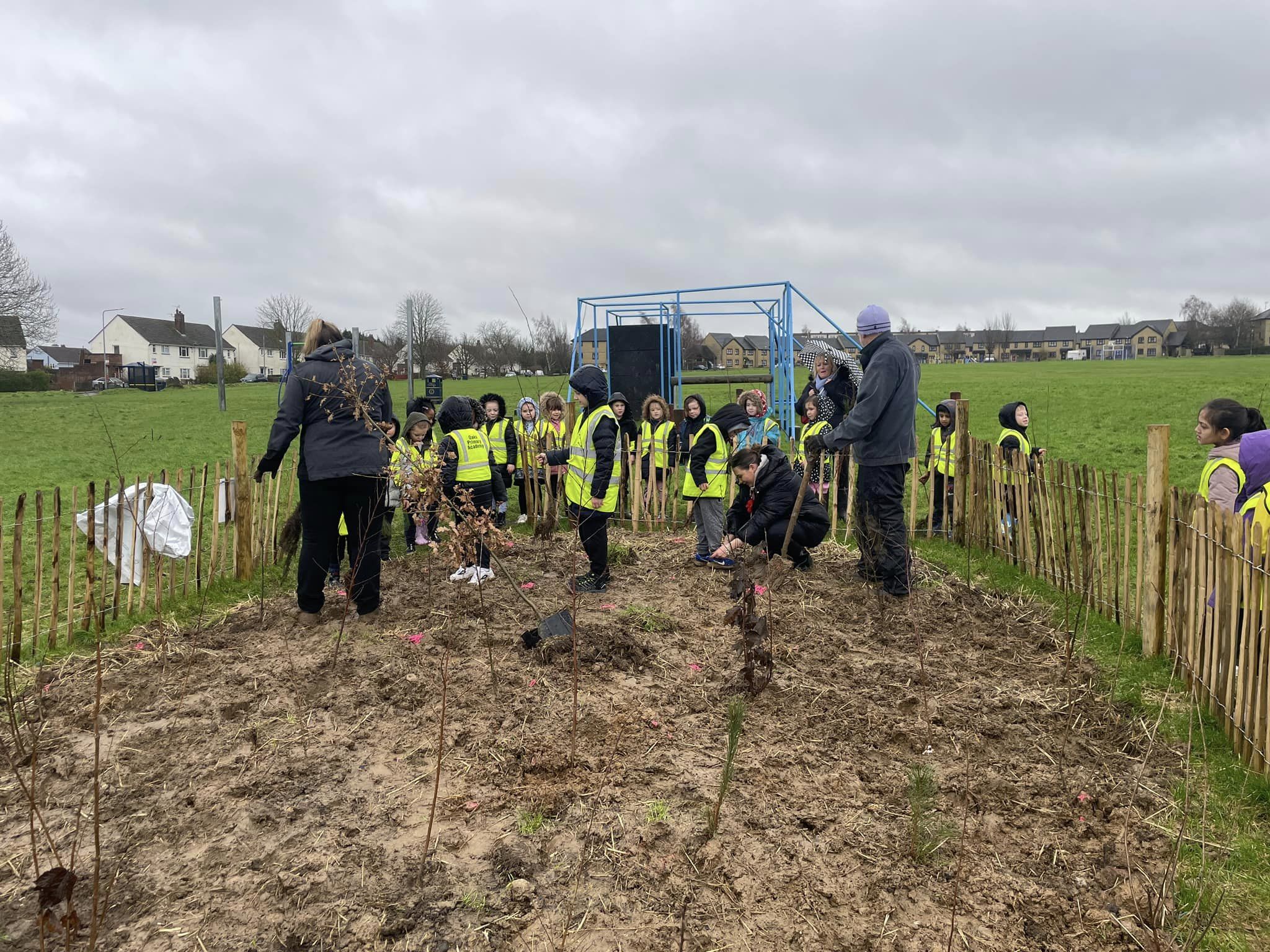

Trees were planted in a similar style to the Miyawaki method; an effective tree planting technique in which seedlings are planted at very high densities. This replicates the regeneration process that occurs in a natural forest when a clearing in the canopy opens up. The saplings grow very fast to compete for the light and then natural selection will favour the fastest growing individuals and act to thin out the trees. The result is a densely-packed pioneer forest that grows in 20 to 30 years instead of taking 150 to 200 years, maximising the carbon reduction potential.
Sutton Valence Tree Planting
At the end of 2022, we funded the creation of a brand new woodland in Sutton Valence. Maidstone Borough Council partnered with Sutton Valence Parish Council and Medway Valley Countryside Partnership (MVCP) to plant a total of 1,600 trees in Platinum Meadow. Volunteers from the local community battled freezing temperatures and snowy conditions to help MVCP complete this fantastic project which will benefit both nature and the local community. The sapling protection and bamboo canes used for this planting were all biodegradable.
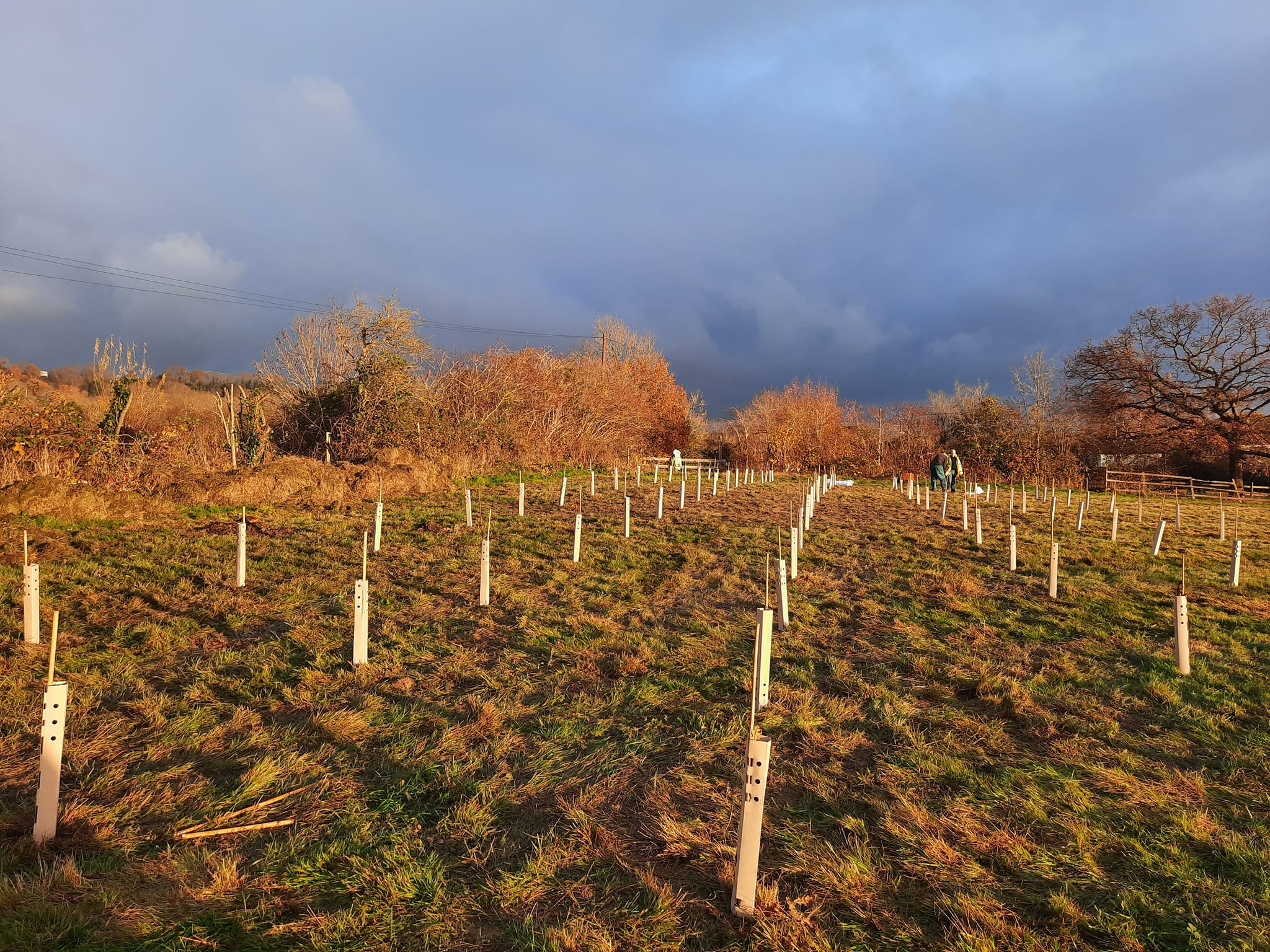
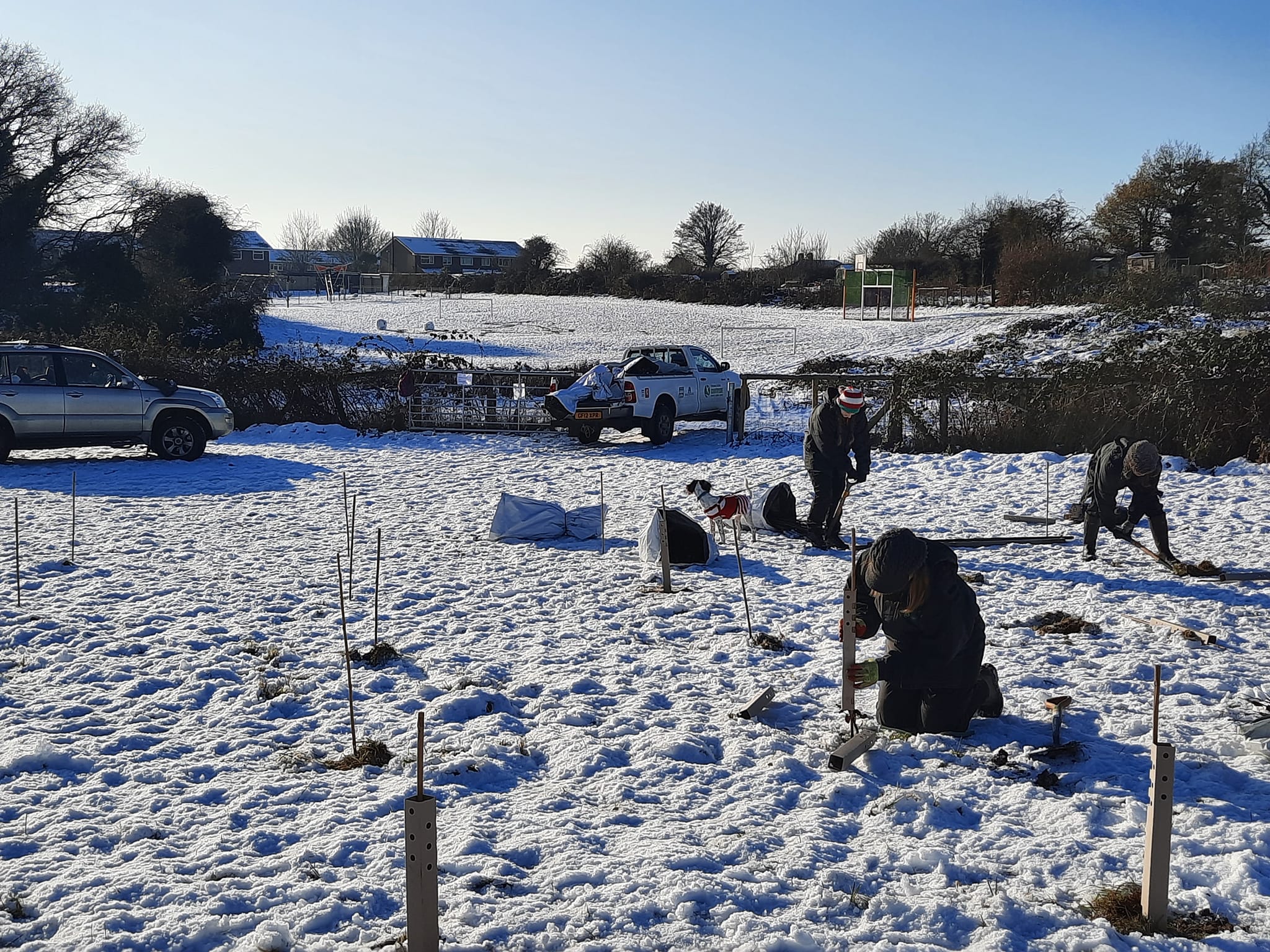
We want to say a huge thank you to MVCP for organising the planting of this new woodland and to all the volunteers who gave up their time to help plant the new trees and make this project such a success.
MBC is looking to support and fund more tree planting projects in the borough of Maidstone. If you are planning a large-scale tree planting project, like the one in Sutton Valence, we want to hear from you. Contact us here.
Call for tree planting projects
As part of our Biodiversity and Climate Change Action Plan, we are seeking to partner with local landowners in the borough to conduct tree planting projects.
Planting trees and increasing woodland cover is a powerful solution to combatting climate change and mitigating increasing global temperatures. Tree planting comes with additional benefits including increasing biodiversity and water retention, while reducing soil degradation and rising temperatures. Tree planting can also provide natural flood management, if trees are planted in the right places. Trees also have a significant positive impact on our wellbeing and health.
We recognise the need and benefits that tree planting in the borough will bring. MBC's owned estate for large scale tree planting is limited, therefore we are calling for public and private landowners to partner with us on tree planting projects across the borough.
The aim of Maidstone Borough Council’s tree planting project is to increase tree cover across the borough whilst ensuring the right trees are planted, in the right place, for the right reasons. In collaboration, and with technical support, from the Kent Wildlife Trust and the Woodland Trust, MBC is issuing a call for proposals for potential tree planting sites. The Council, along with the Trusts, would then work with the landowner to ascertain the feasibility of the project, identify the best land-use options, select tree species that would be appropriate, discern whether it is possible to create woodland corridors or enhance ancient woodlands, increase flood prevention through tree planting, and enhance natural habitats and increase biodiversity.
For more information and to submit a proposal, please visit our 'call for tree planting project proposal' page.
Policy statement - use of native species in planting
Maidstone Borough Council is committed to enhancing local biodiversity, supporting climate resilience, and preserving the natural character of our landscapes. As part of our environmental stewardship and climate change strategy, the Council will prioritise the use of native plant species in all planting schemes wherever and whenever appropriate and feasible
Policy Objectives
- Promote Biodiversity: Native species support a wide range of local wildlife, including pollinators, birds, and invertebrates, contributing to healthier ecosystems.
- Enhance Climate Resilience: Native plants are better adapted to local soil, weather, and water conditions, making them more resilient to climate change impacts.
- Preserve Local Character: Using native flora helps maintain the distinctive landscape character of Maidstone and its surrounding countryside.
- Reduce Maintenance and Inputs: Native species typically require less irrigation, fertiliser, and pest control, supporting more sustainable land management.
Implementation Guidelines
- All new planting schemes on Council-owned or managed land should include native species as the default choice, unless site-specific conditions or design requirements necessitate alternatives.
- Where non-native species are used, they must be non-invasive and provide demonstrable ecological or aesthetic value.
- The Council will maintain a preferred list of native species suitable for different site types (e.g., urban parks, roadside verges, riparian zones).
- Contractors and partners involved in landscape design and maintenance will be required to adhere to this policy.
- Community planting initiatives will be encouraged to use native species and will be supported with guidance and resources.
Monitoring and Review
This policy will be reviewed 5-yearly in line with biodiversity strategy updates, to reflect emerging best practices, climate data, and biodiversity monitoring outcomes.
Other References
The Native Species Policy Statement complements the following: